
Stay calm, and do three things immediately: stop engaging, document everything, and get support. Do not fire back a defensive reply, do not call the person spreading rumors to “clear things up,” and do not post anything public tonight.
- Do not engage. No calls, texts, or comment replies to the source of the rumors.
- Document now. Screenshot messages, posts, and texts with timestamps visible to preserve evidence.
- Contact support. Tell one trusted person what’s happening and consider reaching out to Unmasked Care for structured next steps.
If you’re in crisis, call or text 988 (Suicide & Crisis Lifeline) or 1-800-799-7233 (National Domestic Violence Hotline). Once you’re safe, start building a paper trail and consider when HR or an attorney needs to know.
Pro Tip: Wait 24 hours before replying to anything. Write your response as a draft to a trusted friend first, not to the person attacking you.
Key Takeaways
Responding to a smear campaign works best when silence toward the accuser is paired with active, private documentation and a small circle of trusted support.
| Point | Details |
|---|---|
| Don’t engage the source | Replying directly tends to give the campaign new material to distort. |
| Document everything, dated | Screenshots, exported threads, and witness statements protect you later. |
| Match response to venue | Stay quiet socially, but respond factually and in writing at work or in legal settings. |
| Protect your accounts | Update passwords, enable two-factor authentication, and tighten privacy settings. |
| Use structured tools | Unmasked Care’s evidence file and message decoder help organize proof and draft calm replies. |
Table of Contents
- What Is a Narcissistic Smear Campaign?
- What Tactics Do Smear Campaigns Use?
- What Should You Do Right After a Smear Campaign Starts?
- Should You Respond Publicly or Stay Silent?
- When Does a Smear Campaign Require a Legal or Workplace Response?
- How Do You Preserve Evidence Without Making Things Worse?
- How Do You Handle Friends Recruited Into the Campaign?
- How Do You Recover Emotionally From a Smear Campaign?
- When Does a Smear Campaign Cross Into Defamation?
- How Unmasked Care Helps You Respond and Recover
- Sources
What Is a Narcissistic Smear Campaign?
A narcissistic smear campaign is a deliberate effort to damage someone’s reputation using lies, half-truths, and other people recruited to spread the story. The goal isn’t accuracy. It’s control: the perpetrator protects their own image while punishing or isolating the person they’ve targeted, according to SimplyPsychology.
This article describes behavior patterns, not clinical diagnoses. It is educational information, not a substitute for legal or mental health advice, and nothing here should be read as labeling a specific person with a personality disorder.
A campaign tends to look coordinated when the same claims surface across multiple people or platforms, land at a specific moment (a breakup, a promotion, a custody filing), and keep repeating the same two or three themes no matter who’s telling the story.
What Tactics Do Smear Campaigns Use?
Recognizing the pattern is often faster than trying to reason with individual claims. Watch for:
- Gaslighting — insisting your accurate memory of events is wrong or exaggerated.
- DARVO — deny the behavior, attack the accuser, then reverse victim and offender roles.
- Triangulation and “flying monkeys” — recruiting mutual friends or family to relay messages or pressure you.
- Selective disclosure — sharing a real event stripped of context so it looks damning.
- Social media amplification — vague posts, subtweets, or group messages designed to spread quietly.
Early warning signs include several people mentioning the “same story” within days of each other, friends or coworkers suddenly acting cold or distant, and the accuser reaching out to your circle before you’ve said anything publicly yourself.
What Should You Do Right After a Smear Campaign Starts?
Work through these in order. Each one reduces a specific type of risk, whether that’s emotional escalation, lost evidence, or professional fallout.
- Stop engaging directly. Every reply gives the campaign new material to twist.
- Capture evidence immediately. Screenshot messages and posts with dates and timestamps before anything gets deleted.
- Secure your accounts. Change passwords and check login activity on email and social platforms.
- Inform key allies with facts only. Tell close contacts what’s happening in plain, unemotional terms.
- Limit what you share. Stop posting personal updates publicly while the situation is active.
- Pause all public commentary. Silence on your end starves the story of drama to react to.
Rank these by consequence. Safety concerns come first, followed by anything touching your job or a legal case, then everything else.
Pro Tip: Set up one secure, backed-up folder for evidence outside your phone or main email, and pick a single trusted person to receive updates so you’re not repeating the story to a dozen people.

Should You Respond Publicly or Stay Silent?
Silence is usually the stronger move, because most smear campaigns are built to provoke a reaction, and reacting hands the perpetrator new material, according to Psychology Today. When a reply is genuinely necessary, keep it short and factual.
- To a mutual friend or family member: “I’ve heard what’s being said. It’s not accurate, and I’m not going to get into details over text. Happy to talk in person if you want.”
- To an HR contact: “I want to formally note these claims are inaccurate. I’m documenting the situation and available to discuss whenever it’s useful.”
- A neutral public reply, if one is unavoidable: “I’m aware of the recent posts. I don’t think airing this publicly helps anyone, and I’d rather resolve it directly.”
Pro Tip: Draft the reply, then sit on it for a few hours before sending it through a channel you can document, such as email, or through your attorney.
When Does a Smear Campaign Require a Legal or Workplace Response?
Silence works differently once claims reach HR, a licensing board, or a courtroom. In those settings, staying quiet can be read as confirmation, and documented, unemotional responses become the safer path.
- Collect dated documentation of every relevant email, message, or incident report.
- Brief a trusted supervisor or ally with facts, not emotional framing.
- Request HR guidance in writing so there’s a record of what was said and when.
- Consult an employment attorney if the allegations threaten your job, license, or custody arrangement.
A basic legal triage: document everything, preserve original files and metadata, then consult counsel before responding to anything formal. Concrete survival steps like these matter more than trying to win the argument in the moment.
Pro Tip: Once counsel is involved, let them manage written communications. It keeps your responses consistent and takes the emotional pressure off you.
How Do You Preserve Evidence Without Making Things Worse?
Good evidence needs to be timestamped, complete, and stored somewhere safe. Preserving digital evidence properly means capturing more than a quick screenshot.
- Take timestamped screenshots of posts, texts, and emails as they appear.
- Preserve metadata where possible instead of just cropping images.
- Export full message threads rather than isolated snippets.
- Ask potential witnesses for short, written statements while memories are fresh.
- Store everything in a secure, backed-up folder separate from your main device.
Update your passwords, turn on two-factor authentication, and tighten your social media privacy settings while you’re at it. One caution: don’t delete old accounts or message threads that could later be subpoenaed, even if they feel embarrassing now.
How Do You Handle Friends Recruited Into the Campaign?
Third parties, often called “flying monkeys,” are frequently misled rather than actively malicious, and treating them differently based on their level of involvement matters more than it might seem.
- “I’m not going to relitigate this through you. If you want the full story, ask me directly.”
- “I get that you’ve heard a version of this. I’d rather not put you in the middle.”
Limit contact with mutual friends who seem primed against you rather than trying to talk them out of it. If someone crosses from repeating rumors into actively harassing you, that’s a signal to block, document the behavior, and escalate if it continues.
How Do You Recover Emotionally From a Smear Campaign?
Immediate stabilization matters as much as any documentation step. Ground yourself, reach out to one person you trust, and call 988 or 1-800-799-7233 if you’re in crisis, per the 988 Suicide & Crisis Lifeline.
- Choose a small inner circle for emotional processing instead of venting publicly, since public venting tends to become material the campaign can use.
- Look for a therapist experienced with narcissistic or emotional abuse, and pace how much of the situation you revisit each session.
- Limit how often you check social media or mutual contacts for updates on the rumors.
- Rebuild your reputation through consistent, dignified behavior over months rather than a single public rebuttal.
For a longer roadmap, Unmasked Care’s healing resources walk through recovery in more depth than a single checklist can.
Pro Tip: Record your emotional reactions privately through journaling or voice notes instead of posting them. It protects your composure now and gives you useful material for therapy later.
When Does a Smear Campaign Cross Into Defamation?
U.S. defamation claims generally require three things: a false statement presented as fact, publication of that statement to a third party, and demonstrable harm to your reputation or livelihood.
- A false factual claim, not just a harsh opinion.
- Proof the statement reached someone besides you.
- Actual damage, such as lost work or income.
Many smear statements get framed as “concern” or personal opinion, which can fall short of the legal bar even when they’re clearly damaging. Document everything regardless, and talk to an attorney before deciding whether a defamation claim is realistic for your situation.
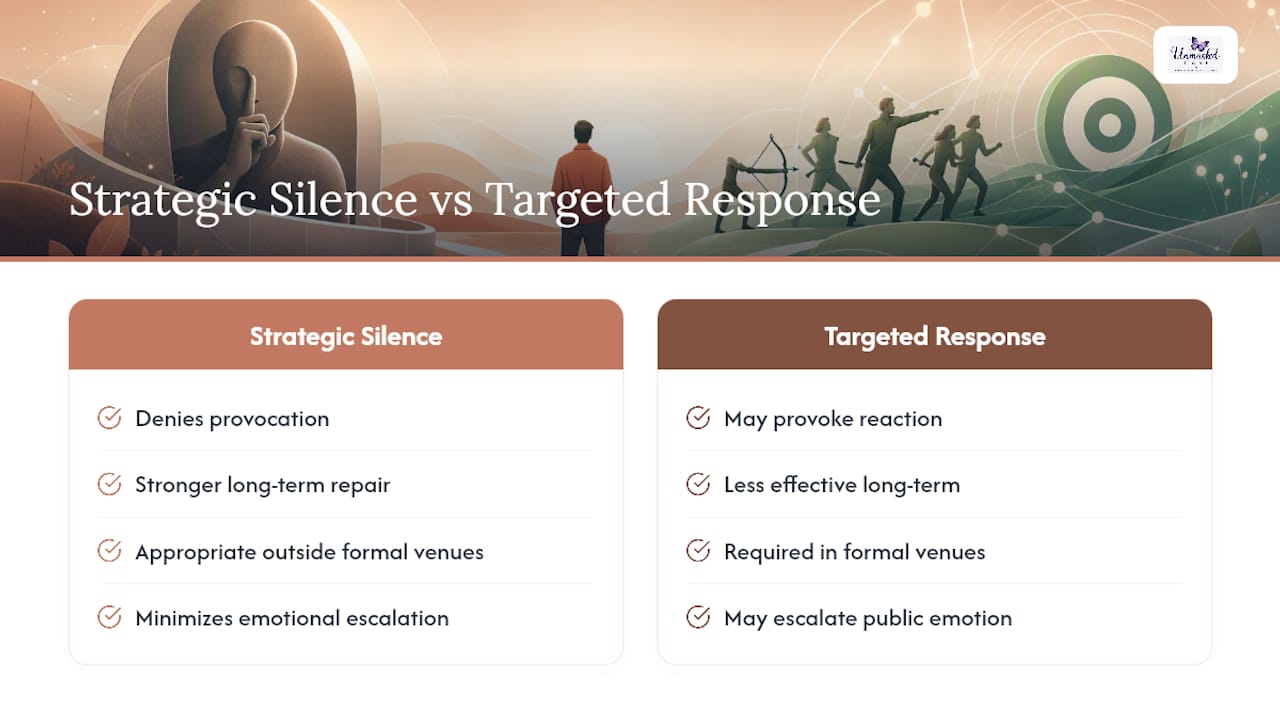
Strategic Silence vs. Targeted Response
Clinical and practical guidance largely agrees: silence denies the campaign the reaction it’s built to provoke, and consistent behavior over months tends to rebuild reputation more effectively than public rebuttals. The exception is formal territory, HR complaints, licensing boards, court filings, where a documented, unemotional response is often required rather than optional. Unmasked Care Team frames this as a judgment call based on venue, not a fixed rule.
How Unmasked Care Helps You Respond and Recover
Documentation is only useful if it’s organized, and replies are only safe if they’re unemotional. Unmasked Care’s privacy-focused evidence file gives you a structured place to store screenshots, timelines, and witness notes without scattering them across your phone and email.
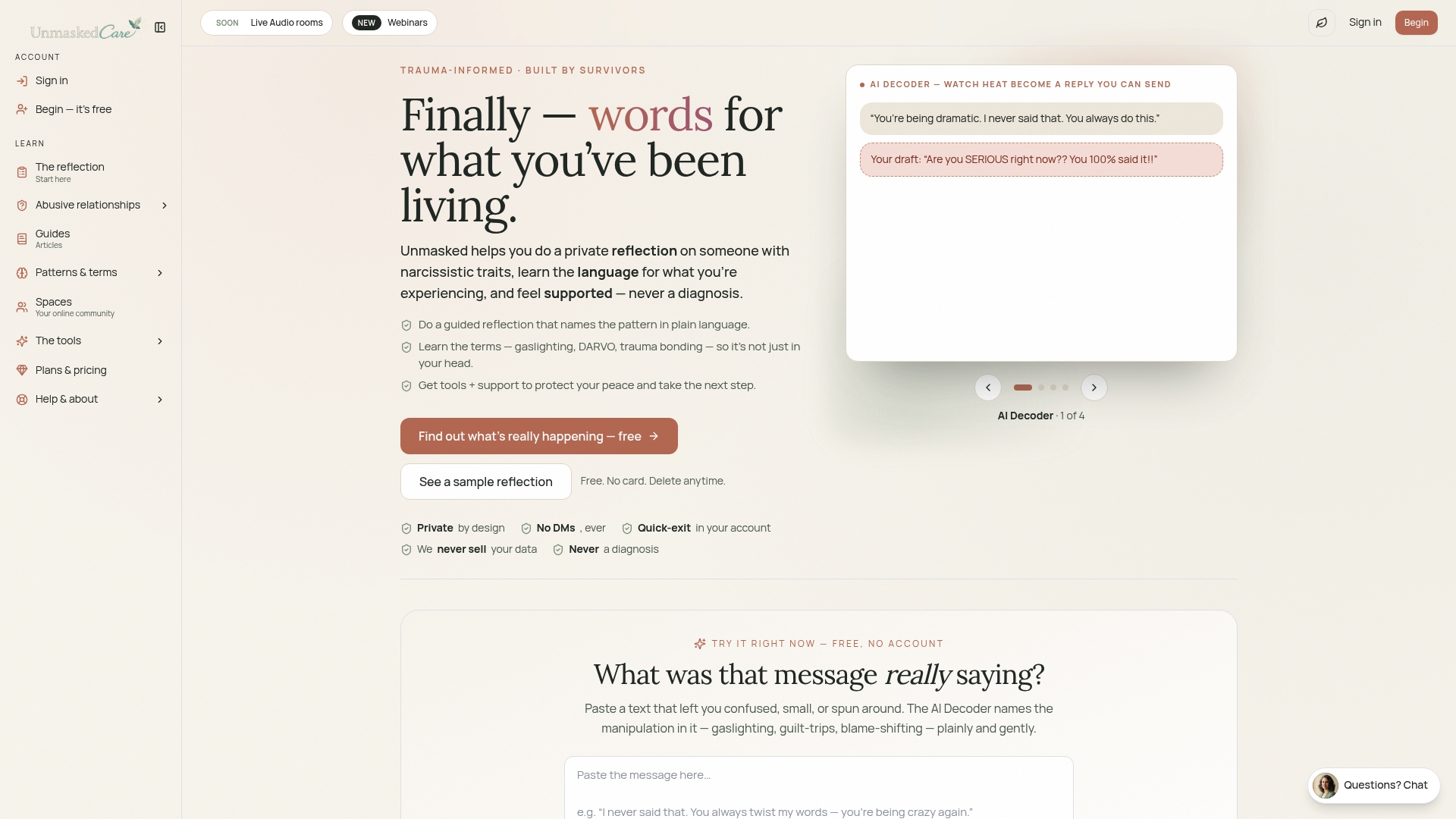
The platform’s AI-powered message decoder helps you unpack a manipulative text or email before you respond to it, which matters when you’re deciding whether a reply is worth sending at all. Guided reflection tools and templated scripts walk you through drafting factual, unemotional language for HR, an attorney, or a mutual contact, so you’re not writing under pressure from scratch. If you’re ready to build a plan around your specific situation, start with Unmasked Care’s healing resources and work through the evidence and response tools from there.
Sources
- Smear Campaigns and How to Overcome Them — Psychology Today
- 988 Suicide & Crisis Lifeline — FCC
- Narcissistic smear campaign — SimplyPsychology
- Flying monkeys: comprehensive guide — Clarity House Press