If you are in immediate danger, call 911. For confidential, 24/7 support, call the National Domestic Violence Hotline at 1-800-799-7233 or the Suicide & Crisis Lifeline at 988. Once you’re safe, three things matter most:
- Don’t shower, change clothes, or clean up the scene if you plan to seek forensic documentation.
- Photograph injuries and damaged property with a timestamp before anything is repaired or cleaned.
- If digital evidence exists, back it up to a safe account from a device the abuser can’t access, and loop in an advocate before doing anything else.
Pro Tip: A domestic violence advocate can help you build a collection plan that fits your specific situation, including whether it’s safe to use your phone at all.
Key Takeaways
Protecting evidence from an abuser works best when physical documentation, digital exports, and secure offsite storage happen together, guided by an advocate.
| Point | Details |
|---|---|
| Prioritize safety first | Call 911 if in danger; use 988 or 1-800-799-7233 for confidential support before anything else. |
| Preserve physical evidence early | Don’t shower or change clothes if forensic documentation is possible; get a SANE exam. |
| Export digital evidence fully | Capture entire conversation threads with metadata, not isolated screenshots. |
| Store backups in two places | Use a private email, password-protected cloud, and an offsite hardware backup. |
| Use Unmaskedcare from a safe device | The evidence file and AI Decoder can help organize documentation and draft statements for advocates. |
Resources for Immediate Next Steps
- National Domestic Violence Hotline: 1-800-799-7233
- Suicide & Crisis Lifeline: 988
- Documenting abuse guide
- Recognizing abusive behavior
This article is general information, not a substitute for advice from a qualified lawyer. Consult a qualified legal professional about your own circumstances before acting on anything here.
Table of Contents
- How to Preserve Physical Evidence and Get Medical Documentation
- How Do You Document Texts, Calls, and Other Digital Evidence?
- Where Should You Store Evidence to Keep It Safe?
- How Evidence Supports Police Reports, Medical Records, and Protection Orders
- What Not to Do When Collecting Evidence
- How Unmasked Care’s Tools Fit Into Safe Documentation
- Sources
How to Preserve Physical Evidence and Get Medical Documentation
Physical evidence degrades fast, and decisions made promptly often determine what’s available later. If you think you may want forensic documentation, avoid showering, bathing, or changing clothes before you see a medical provider. That instruction feels counterintuitive when every instinct says to clean up, but biological evidence and fiber transfer are only recoverable in that narrow window.
Here’s a practical sequence to follow:
- Place any clothing worn during or after the incident into separate paper bags, not plastic, since plastic traps moisture and degrades evidence. Label each bag with the date and time.
- Get medical care and ask specifically about a Sexual Assault Nurse Examiner (SANE) exam if the abuse involved sexual violence or serious physical injury. SANE nurses are trained to document injuries in a format courts recognize.
- Request copies of your medical records and any photographs the clinician took, and note the visit date and provider name for your own file.
- Photograph injuries in natural light, include a ruler or coin for scale if you have one, and make sure your phone’s timestamp is turned on.
- Do the same for property damage. A broken door or shattered phone screen tells a story on its own, but only if you note where it happened and when.
Pro Tip: Take a wide shot and a close-up of every injury or damaged item. Courts and advocates both find the combination more convincing than either alone.
How Do You Document Texts, Calls, and Other Digital Evidence?
Screenshots are a start, but they’re often not enough on their own. Courts frequently need digital evidence in a form that shows the full context, not an isolated message pulled out of a thread. The National Council of Juvenile and Family Court Judges recommends exporting entire conversations rather than cropping single texts, because a pattern of behavior carries more weight than one bad message.
Follow these steps to capture technology-facilitated abuse:
- Use your phone’s native export or backup feature when possible instead of only screenshotting, since exports preserve sender information, phone numbers, and timestamps automatically.
- If you must screenshot, overlap each image slightly so there are no gaps, and always include the header showing the contact’s name or number and the date.
- Save voicemails immediately. Many carriers delete them after a set period, so download the audio file or call your carrier to request a preservation hold.
- Keep call logs, and if the harassment is frequent, ask your carrier for detailed billing records that show call frequency and duration over time.
- Watch for stalkerware. If you suspect the abuser has access to your device or accounts, don’t collect evidence on that device at all. Use a library computer or a trusted friend’s phone instead, and talk to an advocate before you start.
Pro Tip: Metadata, the invisible details behind a message like sender ID and timestamp, often matters more to a judge than the message content itself. Never rely on a cropped screenshot alone.
Where Should You Store Evidence to Keep It Safe?
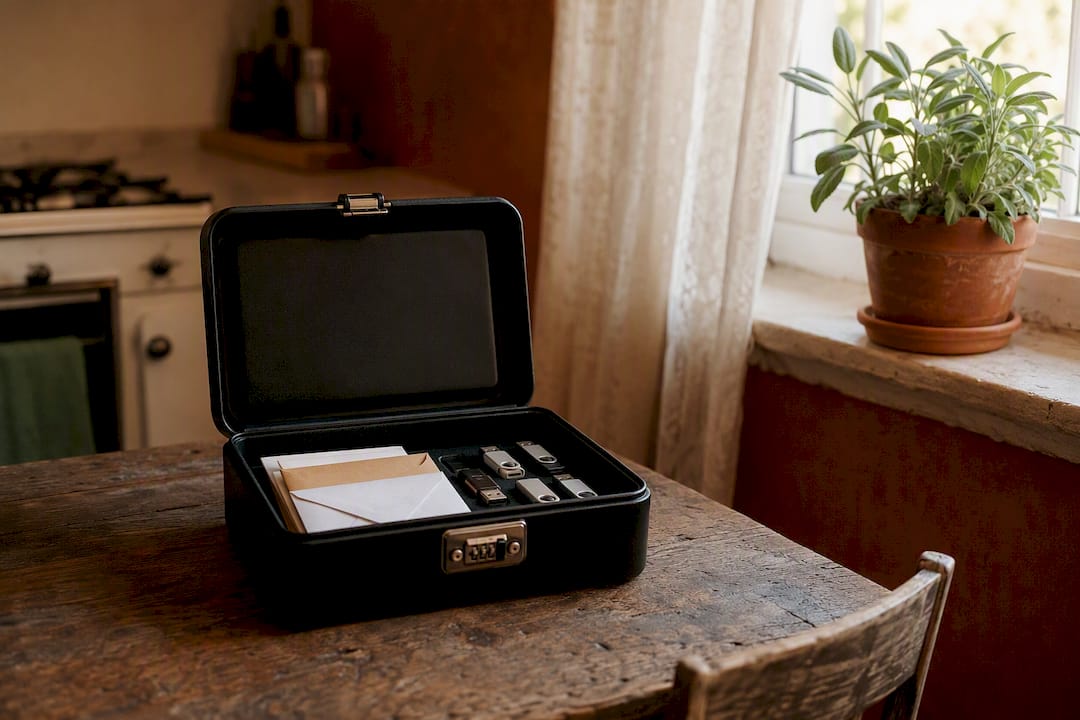
Collecting evidence means nothing if the abuser finds and deletes it first. Set up a dedicated, private email account solely for this purpose, created on a device you’re confident isn’t monitored, then attach a password-protected cloud account to it. The New York Office for the Prevention of Domestic Violence specifically recommends this separation so an abuser doing a routine phone check won’t stumble onto your documentation.
Beyond that single account, a few habits reduce your risk considerably:
- Keep an encrypted backup on a physical drive stored somewhere outside the home, like at work or with a trusted relative.
- Avoid apps or accounts that send notifications the abuser could see on a shared device or family plan.
- If you delete anything from your phone, also clear it from the “recently deleted” folder and wipe relevant browser history.
- Maintain at least two separate backups in two separate locations, since a single point of failure defeats the purpose.
Pro Tip: Test your backup by logging into it from a different device before you need it. An account you can’t access under pressure isn’t a safety net.
How Evidence Supports Police Reports, Medical Records, and Protection Orders
Not all evidence carries equal weight at every stage of a legal process. Temporary protection orders are often decided from written affidavits and recent documentation, meaning a recent photo, a fresh police report, or a message from the last few days can matter more than something months old. Here’s how to work with the systems that will evaluate your case:
- File a police report when it’s safe to do so, and write down the responding officer’s name and badge number before they leave.
- Ask the department how to request an official copy of the report later. Most agencies have a records division separate from patrol.
- Complete a SANE exam or standard medical visit when injuries occurred, then request copies of the chart notes and any photographs, noting the date and any case number assigned.
- Contact a domestic violence advocate or legal aid organization to help store copies securely, draft a declaration, and prepare filings. Advocates who work with survivors daily often catch procedural details a first-time filer would miss. A legal overview of how evidence functions in these cases can help you understand what judges typically weigh.
What Not to Do When Collecting Evidence
A few common mistakes either put survivors at greater risk or weaken the evidence itself.
- Never attempt to collect evidence alone on a device you believe the abuser monitors. Escalation risk is real, and an advocate can help you plan around it safely.
- Check your state’s law before recording a phone call. Some states require consent from every party on the line, and an illegally obtained recording can create legal exposure for you.
- Don’t post about the abuse or your evidence on social media while a case is active. It can be used against you and may tip off the abuser to what you’ve collected.
- Never store evidence somewhere the abuser has access, like a shared car glove box, a joint cloud account, or a family computer.
How Unmasked Care’s Tools Fit Into Safe Documentation
Unmaskedcare’s evidence file feature was built with privacy in mind, giving survivors a structured place to organize documentation away from shared devices or accounts. Used from a safe device and a private login, it can help turn scattered notes into something usable.
- The AI Decoder can help you unpack a manipulative message and put language to what happened, which is often useful when drafting a statement for an advocate or a court filing.
- Structured reflections can help you summarize incidents in the plain, dated format courts and advocates find easiest to work with.
- If you suspect a device is monitored, don’t upload anything sensitive until you’ve talked with an advocate about safe access.
Safety Comes Before Documentation
Evidence matters, but it’s never worth more than your immediate safety. If collecting proof puts you at greater risk in the moment, it can wait, or an advocate can help gather it later. This article is educational and is not a diagnosis of anyone’s behavior or mental health. If you need support now, call 988 or 1-800-799-7233.
— Unmasked Care Team
Organizing Your Documentation Without Adding Risk
Once immediate safety is handled, the harder part is often keeping evidence organized without it becoming another source of stress. Unmaskedcare’s evidence file feature gives you a private, structured place to log incidents and store documentation separately from shared devices, which matters when you’re trying to keep a paper trail an abuser can’t stumble onto.
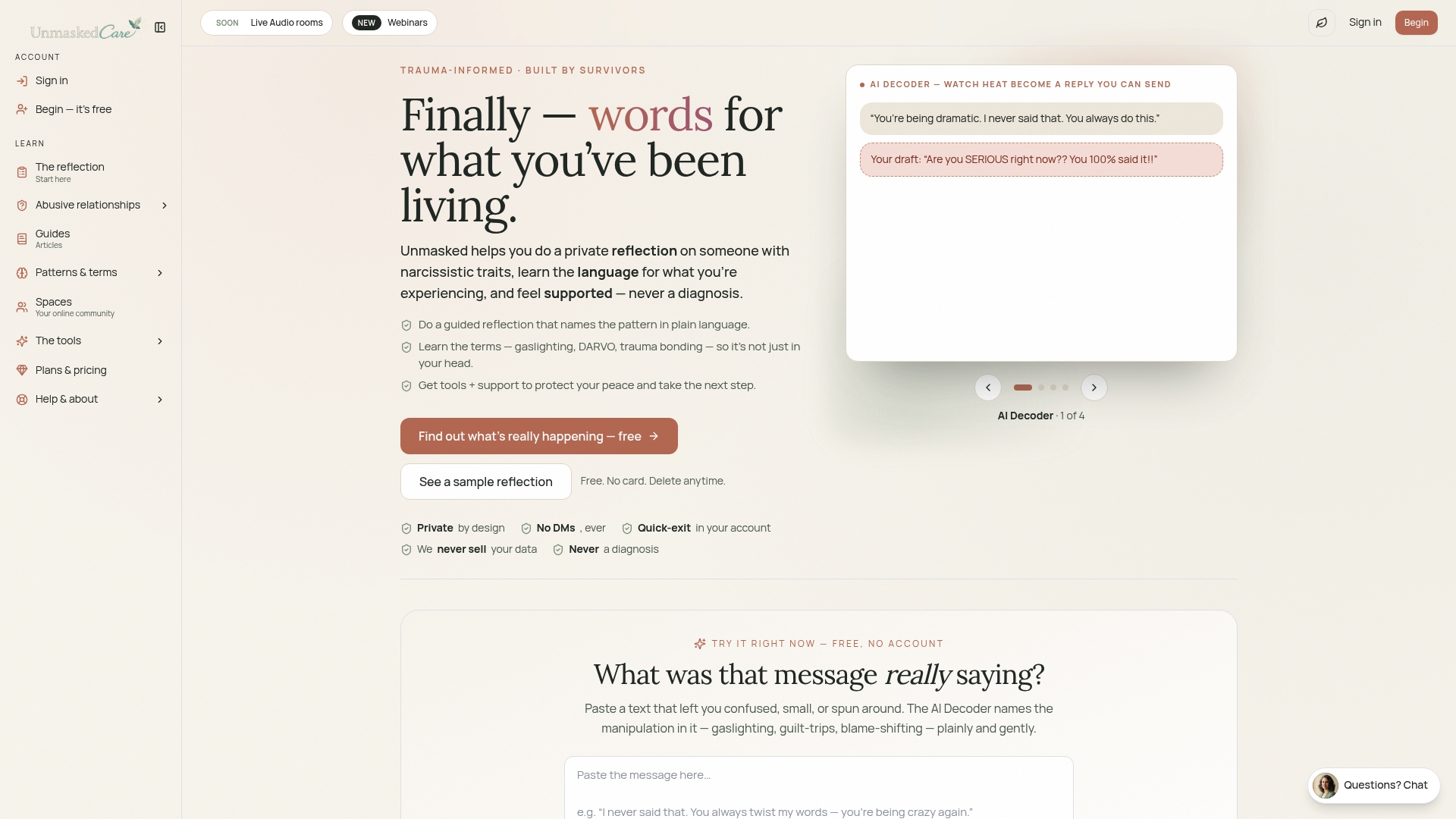
The AI Decoder can also help when you’re staring at a manipulative text and can’t tell if you’re overreacting or reading it correctly. It breaks the message down in plain language, which can be genuinely useful when you’re drafting a statement for an advocate or trying to explain a pattern of behavior to a lawyer. None of this replaces a safety plan built with a trained advocate. If a device might be monitored, talk that through first. If you want to see how the evidence file and Decoder work together, visit the Unmasked Care resource page and start building your documentation from a device you know is safe.